
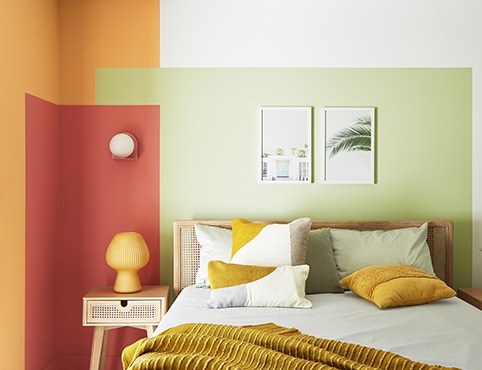
Apartment rooms often perform more than one job. Color can identify a dining corner, give a bed visual shelter, connect a narrow hallway to the living room, or make existing millwork feel intentional—all without reducing usable space.
Decide what should connect
A continuous wall color can make several small rooms feel calmer and larger. Use changes in finish, ceiling color or one concentrated accent to distinguish zones without creating visual clutter.
In a railroad layout, repeating one trim color from front to back creates a useful line of continuity.
Create a focal zone
Painted shapes work best when they respond to furniture and architecture. Align an edge with a headboard, desk or shelving unit, and limit the palette so the gesture feels designed rather than temporary.
- Use a laser level and low-tack tape
- Seal tape edges with the base color
- Remove tape while the final coat is still slightly wet
- Keep one quiet color around the composition
Use sheen strategically
A more durable eggshell or satin can make sense in entries and high-traffic passages. Matte finishes reduce glare on imperfect walls and help open living areas feel softer.