
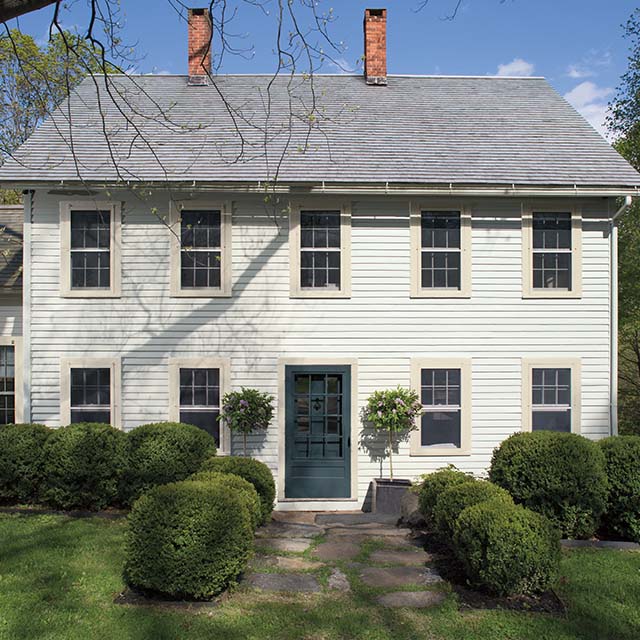
Exterior accents are most effective when they explain the building. A door can announce the entrance, shutters can reinforce window proportions, and trim can make the roofline legible. When every small detail receives a separate color, however, the architecture can lose its hierarchy.
Decide where the eye should land
Choose one primary focal point—usually the entrance—and let secondary details support it. View the house in a grayscale photo: the light and dark pattern should still make sense before hue is introduced.
On an ornate façade, fewer colors can make craftsmanship easier to appreciate. On a simple façade, one well-placed accent supplies identity.
Repeat with restraint
An accent feels connected when it appears once more in a smaller way, perhaps on planters, a bench or a narrow architectural line. Avoid repeating the strongest color across every shutter, door and railing by default.
- Use trim to organize edges
- Reserve the strongest contrast for the entrance
- Connect metal finishes to the palette
- Keep utility elements visually quiet
Protect detailed surfaces
Scrape, sand and spot-prime failed areas, paying close attention to end grain, joints and horizontal ledges. Use the appropriate enamel or exterior coating for doors, trim and metal, and avoid painting hardware or weather seals that need to move freely.