
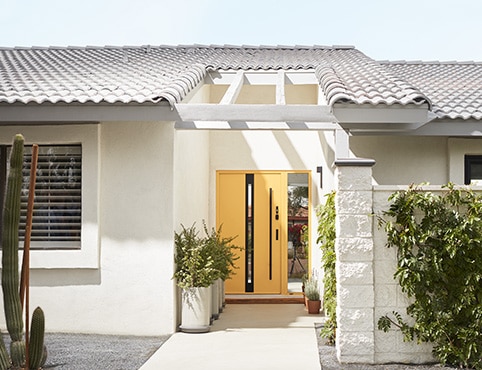
The front door is a small surface with unusual visual influence. It is where architecture, landscaping, hardware and personal style meet. A successful door color should be noticeable from the sidewalk, balanced at close range and compatible with the fixed materials that will remain long after the painting is complete.
Read the whole approach
Stand at the curb before selecting a color. Note the siding or masonry undertone, roof, steps, railings, plantings and neighboring houses. The door should belong to that composition even when it provides the strongest note.
Warm brick often welcomes earthy reds, blue-greens and grounded neutrals; cooler stone may work beautifully with inky blue, charcoal or a clear botanical green.
Test at door scale
Sample color vertically and view it from the street, entry path and interior foyer. Direct sun can wash a color out while a covered porch can make the same choice feel substantially darker.
- Check morning and late-day light
- Place the sample beside hardware
- Review it with storm or screen doors closed
- Confirm the sheen on a sample board
Prepare for constant handling
Clean and dull the existing finish, repair open joints, feather damaged edges and prime exposed material. A durable door and trim enamel gives the surface the leveling, block resistance and washability an entrance needs. Follow the coating's temperature, dry-time and recoat requirements before closing the door.