
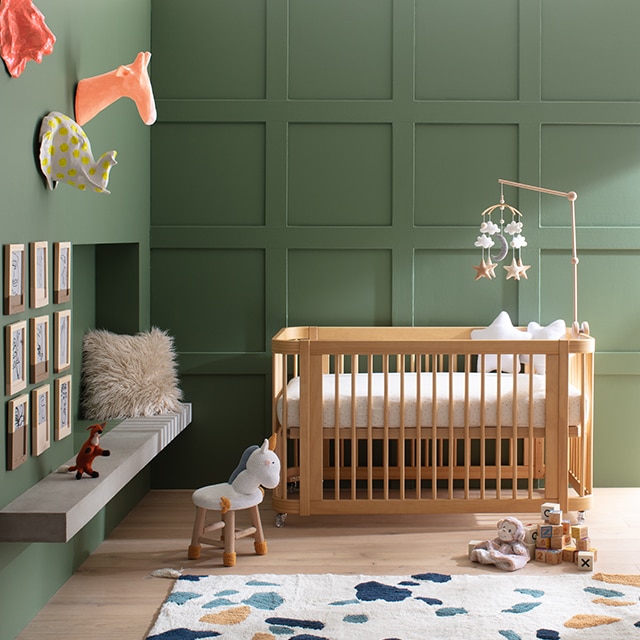
The most successful nursery palettes do not depend on a single age or theme. Start with an architectural wall color, build softness through textiles, and let smaller objects carry the most playful notes. The room can then evolve without needing a complete repaint every few years.
Begin with the mood
Restful does not have to mean colorless. Muted greens, soft blues, warm clay tones and gentle neutrals all create a settled background while leaving room for pattern and personality.
Observe the room at nap time and in the evening. A color that feels fresh in direct sun may become deeper and more enveloping when the shades are drawn.
Give the architecture a role
Paneling, a painted ceiling, built-in shelves or a single color-wrapped wall can make a compact room feel intentional. Keep the largest surfaces related, then use art, rugs and storage as movable accents.
- Use a washable interior finish on busy walls
- Choose low-odor products and allow full ventilation
- Sample beside flooring, crib wood and window treatments
- Keep leftover labeled paint for future touch-ups
Plan for the next chapter
A sophisticated main color can move from nursery to child’s room with only a change of bedding and artwork. When trim and doors share a consistent neutral, later changes are even simpler.