
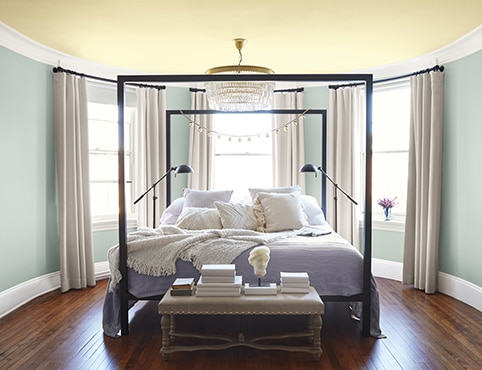
The ceiling occupies a large visual plane, yet it is often left out of the palette. Even a subtle variation from white can make trim, wall color and furnishings feel more connected. Deeper choices can create intimacy in rooms designed for evening use.
Decide what the ceiling should do
A lighter version of the wall color can visually raise the ceiling while keeping the palette cohesive. Warm pale color softens cool daylight. A deeper ceiling lowers the apparent height and creates a more intimate atmosphere.
In open plans, a ceiling shift can define a dining or seating zone without adding a wall.
Account for reflected color
Ceilings receive reflected light from walls, floors and windows. A white ceiling above a strong wall color may pick up that hue. Review a sample horizontally overhead whenever possible.
- Use a large sample board
- Check daylight and electric light
- Choose a dedicated ceiling paint for a flat, forgiving finish
- Repair seams and water stains before coating
Plan the application
Clear the room, protect floors, cut the perimeter and maintain a wet edge while rolling. Work away from the main window so the light helps reveal missed areas. Never coat an active stain before correcting its source.