
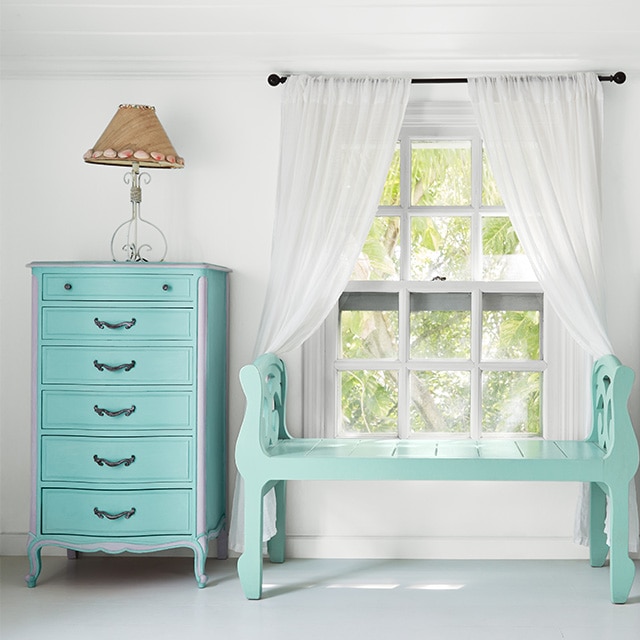
A dresser, side table or built-in can carry confident color with less commitment than an entire room. The project is compact, but the coating still has to bond, level and withstand daily handling.
Identify the existing surface
Determine whether the piece is bare wood, factory-finished, previously painted or laminated. Clean away wax, polish and grease before sanding; sanding contamination into the surface makes adhesion less reliable.
Test an inconspicuous area if the old coating is unknown. Older painted furniture may require lead-safe work practices.
Build the coating system
Scuff the surface uniformly, remove dust, and use a bonding or stain-blocking primer when the substrate calls for it. A leveling waterborne enamel such as ADVANCE is designed for furniture, cabinets and trim.
- Remove hardware and label every piece
- Prime knots and stains appropriately
- Use thin, even coats
- Respect recoat and cure time before daily use
Make the color belong
Repeat the furniture color in art, a pillow or an adjacent room. This small echo helps a vivid piece feel integrated rather than accidental.