
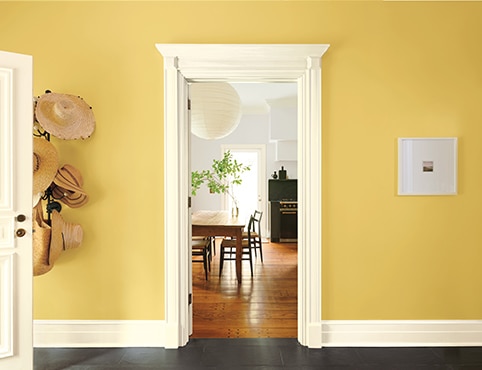
Trim is not automatically white. It can disappear into the wall, create a crisp frame, or become the main color event. The best approach depends on the quality of the millwork, the transitions between rooms and the amount of contrast the architecture can support.
Choose a contrast strategy
Light trim around a deeper wall emphasizes openings and profiles. Matching wall and trim color makes a room feel larger and more enveloping. A dark door with quiet walls can lead the eye through a sequence of spaces.
Before choosing, look through multiple doorways at once. Trim decisions are experienced across the home, not one room at a time.
Control the undertones
A clean white can make a warm wall appear more yellow; a softened white may create a more natural transition. Place the two samples directly beside each other and review them with flooring.
- Repeat the trim color consistently
- Use the same door color on both sides only when it suits both rooms
- Consider satin or semi-gloss for serviceability
- Repair open joints before painting
Prepare the edges
Fill and sand damage, clean hand oils, dull glossy existing enamel and spot-prime repairs. Crisp color relationships depend on crisp physical edges.