
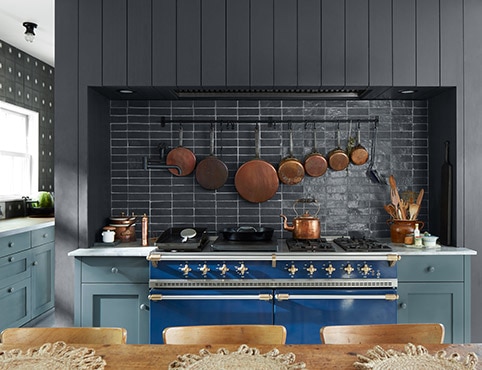
Sheen changes more than shine. It affects how color reads, how surface imperfections appear, how readily a finish cleans, and how strongly trim or cabinetry separates from the wall. The best choice is the quietest level of reflection that still meets the room’s performance needs.
Understand the progression
Matte finishes absorb more light and create a soft, quiet field of color. Eggshell introduces a low, subtle reflection and is a versatile choice for many living areas. Pearl and satin provide a smoother, more noticeable luster with increased resistance to regular handling and cleaning. Semi-gloss creates crisp definition and is often reserved for trim, doors, and selected millwork.
Names and measured gloss can vary by product line. Compare the actual finish within the paint family you plan to purchase rather than assuming every brand or formula uses the terms identically.
Let the surface guide the decision
Lower sheen is generally more forgiving of patched plaster, waviness, and walls crossed by strong daylight. Higher sheen reflects light more directly and can reveal texture, roller marks, and repair edges. On carefully prepared doors and cabinets, that reflection can be an advantage because it clarifies profiles and makes the finish feel tailored.
- Matte: quiet color and forgiving reflection
- Eggshell: subtle luster for versatile wall use
- Pearl or satin: added resilience for active areas and millwork
- Semi-gloss: sharper architectural definition and regular cleaning
Balance traffic with preparation
Entries, children’s rooms, kitchens, baths, doors, and cabinets need finishes suited to contact and cleaning. Durability, however, is not created by sheen alone. The product line, surface preparation, primer, cure time, and cleaning method all influence performance.
Moisture-prone rooms also require ventilation and a coating intended for the environment. A glossier finish cannot correct persistent condensation or mildew conditions by itself.
Sample color and sheen together
A deeper color may appear richer and more saturated as sheen increases, while daylight can turn even a modest luster into a visible highlight. Test the intended product and finish on a properly prepared sample area, then view it from several angles during the day and under evening lamps.
For a refined layered effect, keep the color constant and shift only the sheen between walls and trim. For stronger definition, combine a controlled color contrast with one measured step in sheen.