
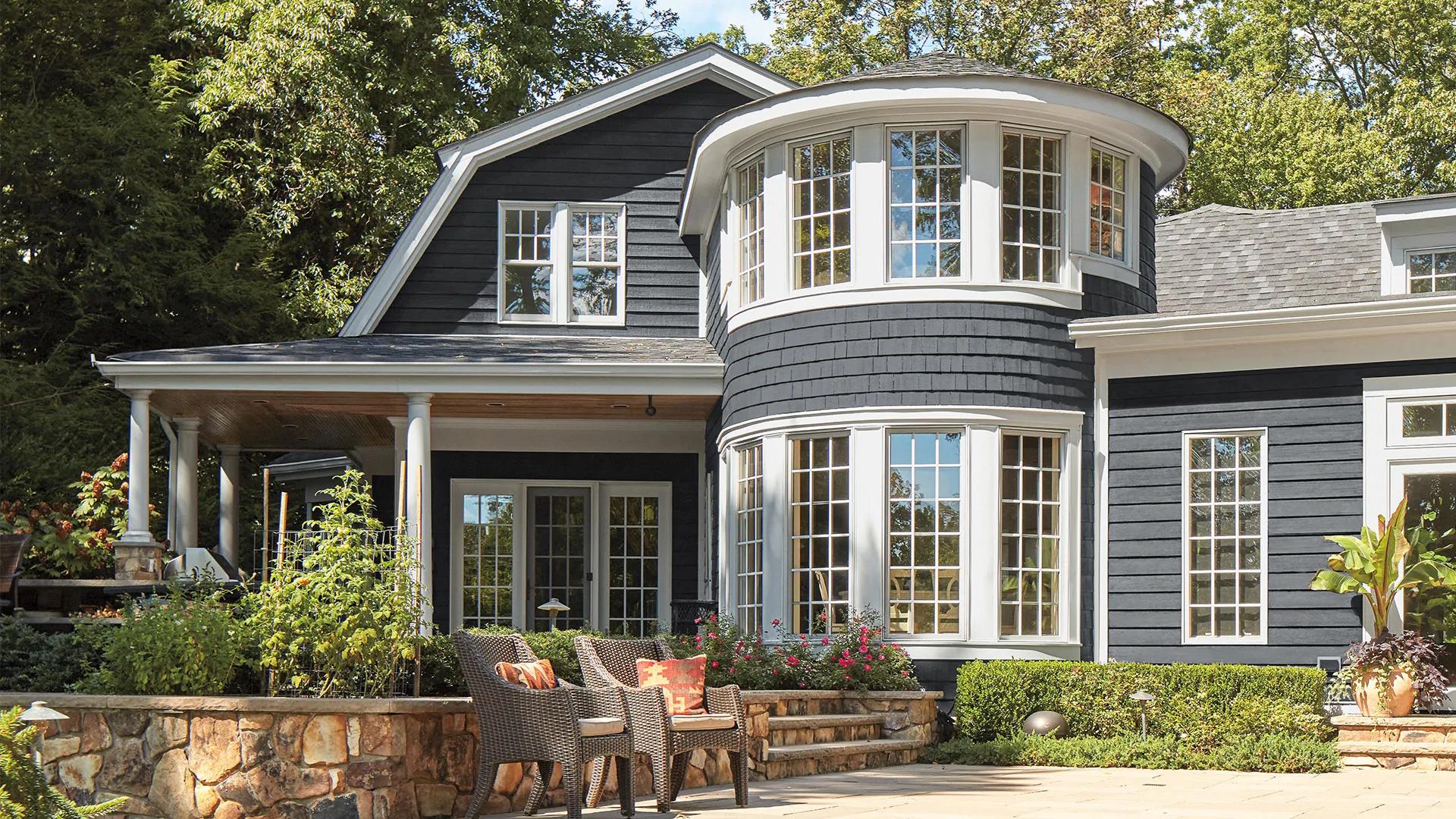
A beautiful exterior is more than a body color. Siding, trim, doors, masonry, roof materials and surrounding landscape all participate in the palette—and New York weather asks the finish to work hard after the color decision is made.
Build the palette in hierarchy
Choose the broadest surface first. The body color should connect to permanent elements such as brick, stone and roofing. Select trim next, then add a deliberate door or architectural accent. Three clear roles usually create more confidence than many competing colors.
Read color outdoors
Exterior daylight can make a color appear lighter and cooler than it does indoors. Review samples on more than one side of the building, because direct sun, open sky and shade produce different readings. Observe them at different times and against the existing masonry and roof.
- Body: the visual foundation
- Trim: contrast or quiet continuity
- Door: a focused accent
- Porch ceiling or shutters: an optional fourth note
Performance begins below the finish coat
Correct water entry, remove loose paint and chalk, clean mildew, and prime exposed substrate before painting. Aura Exterior is designed for premium color retention and resistance to UV exposure, rain, snow and wind, but even the best finish depends on a clean, dry and sound surface.