
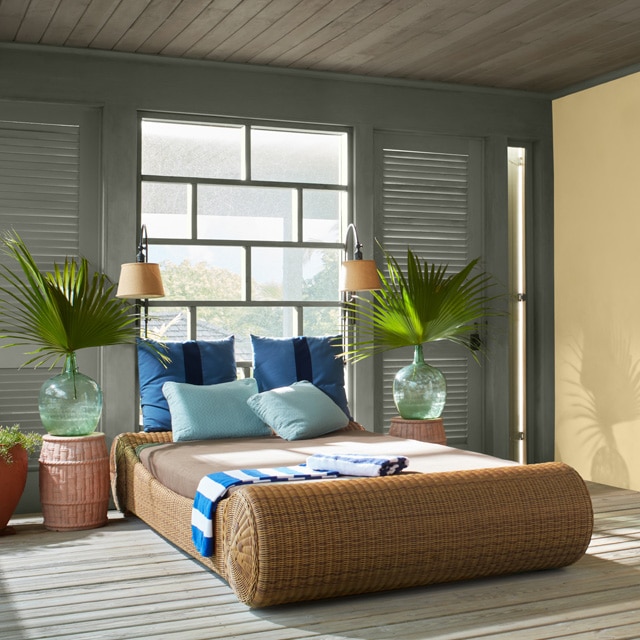
Nature offers more than green. Think of sun-warmed ochre, weathered bark, clay, open sky and quiet stone. A room feels connected to the outdoors when these relationships are edited into a clear hierarchy rather than copied literally.
Choose one dominant landscape note
Begin with the feeling you want: leafy and restorative, coastal and open, or warm and sunlit. Select one main hue for the largest plane, then support it with two quieter colors.
Natural wood, woven fiber, linen and stone already count as part of the palette. Place samples beside those materials before deciding.
Layer color across surfaces
Walls do not have to carry every idea. A pale wall with olive trim, an ochre ceiling or a blue-gray door can introduce depth while keeping the overall room composed.
- Repeat the dominant hue at least twice
- Vary value more than saturation
- Use trim to frame a view or doorway
- Let plants be texture, not the only green element
Read the exposure
North-facing rooms often benefit from colors with enough warmth to remain welcoming. Bright south-facing rooms can support cooler or deeper hues. Test every candidate through a full day before committing.